Home » Can Smart Locks Be Hacked? A Deep Dive into Cybersecurity Risks
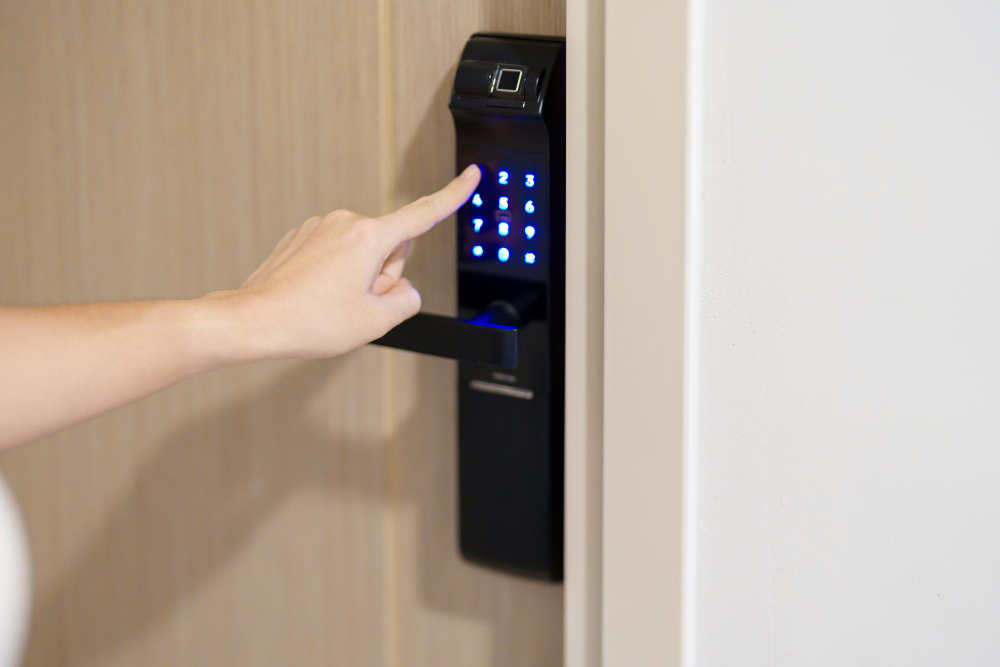
Smart door locks offer convenience, keyless entry, and remote access control, making them a popular choice for modern homes. However, as with any internet-connected device, they come with cybersecurity risks. The question many homeowners ask is: Can smart locks be hacked?
The short answer is yes—but the risk level depends on the type of smart lock, its security features, and how users set it up. In this article, we’ll explore the vulnerabilities of smart locks, real-world hacking incidents, and how to protect your home from cyber threats.
Many smart locks use Bluetooth for short-range wireless communication. While convenient, Bluetooth has known vulnerabilities:
Example: In 2016, researchers demonstrated how a August Smart Lock could be hacked via Bluetooth spoofing.
Wi-Fi-enabled smart locks rely on cloud servers for remote access. Risks include:
Example: In 2019, a vulnerability in U-tec’s Ultraloq allowed hackers to exploit Wi-Fi credentials.
Not all hacking is digital—some smart locks can be bypassed physically:
Example: A 2022 study found that some Amazon-branded smart locks could be opened with a screwdriver.
Example: In 2020, researchers found that Samsung’s SmartThings Hub had API flaws allowing remote unlocking.
| Incident | Vulnerability Exploited |
|---|---|
| August Smart Lock (2016) | Bluetooth spoofing allowed unauthorized access. |
| U-tec Ultraloq (2019) | Weak Wi-Fi encryption enabled remote hacking. |
| Tesla Model 3 (2021) | Hackers used a relay attack to unlock cars (similar to smart locks). |
| Amazon Smart Lock (2022) | Physical bypass via screwdriver manipulation. |
Smart home automation companies like Patobe play a crucial role in enhancing the security of smart door locks and preventing hacking attempts. By integrating advanced technologies, robust encryption, and proactive security measures, Patobe ensures that your smart locks remain secure while providing seamless automation.
Here’s how Patobe Smart Home Automation can help prevent hacking:
Patobe carefully selects and integrates only the most secure smart locks with features like:
✔ End-to-End Encryption (AES-256)
✔ Multi-Factor Authentication (MFA) for app access
✔ Tamper Detection Alerts (notifies you of forced entry attempts)
✔ Regular Firmware Updates (automatic security patches)
By working with trusted manufacturers, Patobe ensures that vulnerabilities in cheap or poorly designed smart locks are avoided.
Since most smart lock hacks happen due to weak Wi-Fi or Bluetooth security, Patobe implements:
✔ Dedicated IoT Network Segmentation – Isolates smart locks from other devices to prevent lateral attacks.
✔ Enterprise-Grade Firewalls & VPNs – Protects remote access from hackers.
✔ Intrusion Detection Systems (IDS) – Monitors for suspicious activity in real time.
This prevents man-in-the-middle (MITM) attacks, brute-force attempts, and unauthorized access.
Patobe’s smart home systems use AI-driven security algorithms to:
🔹 Detect unusual access patterns (e.g., repeated failed unlock attempts).
🔹 Block brute-force attacks on digital keypads.
🔹 Alert homeowners of potential hacking attempts via SMS or app notifications.
Example: If someone tries to spoof a Bluetooth signal or intercept Wi-Fi credentials, Patobe’s system can automatically lock down access and notify the user.
Many smart locks rely on cloud servers, which can be hacked. Patobe mitigates risks by:
✔ Using Private, Encrypted Cloud Servers (not shared with third parties).
✔ Enforcing Strong Password Policies (no default credentials).
✔ Offering Biometric Authentication (fingerprint or facial recognition for app access).
This prevents cloud-based exploits like credential stuffing or API breaches.
Some smart locks can be bypassed physically. Patobe combats this by:
✔ Recommending smart locks with anti-pick, anti-drill, and anti-bump mechanisms.
✔ Installing reinforced strike plates and deadbolts to prevent forced entry.
✔ Using battery backup systems so locks don’t fail during power outages.
This ensures that even if a hacker tries physical tampering, the lock remains secure.
Patobe doesn’t just install smart locks—it monitors and maintains them by:
🔸 Automatically applying firmware updates to patch vulnerabilities.
🔸 Performing penetration testing to find weaknesses before hackers do.
🔸 Providing security training for homeowners to avoid phishing scams.
This proactive approach keeps your smart locks ahead of emerging threats.
If a breach is detected, Patobe’s system can:
🚨 Temporarily disable remote access
🚨 Freeze digital keypad codes
🚨 Trigger alarms or cameras to deter intruders
This ensures that even if a hacker gains partial access, they can’t fully compromise the lock
Patobe Smart Home Automation doesn’t just automate your home—it fortifies it against cyber threats. By combining military-grade encryption, AI monitoring, secure cloud infrastructure, and physical hardening, Patobe ensures that your smart locks are convenient yet unhackable.
Patobe Smart Homes is a smart home automation company in Nigeria. We are Nigeria’s smart living pioneers bringing cutting-edge home automation solutions to Africa and the world.